Québec City Tour: Pictures
August 23, 2026
While I dislike travelling, I decided to take a 3 week vacation to Québec City, mainly to improve my French. At the insistence of German classmate, I decided to make “most” of the vacation and participate in some tourist activities, even if I dislike it. Here are some dumps from my tour thus far:
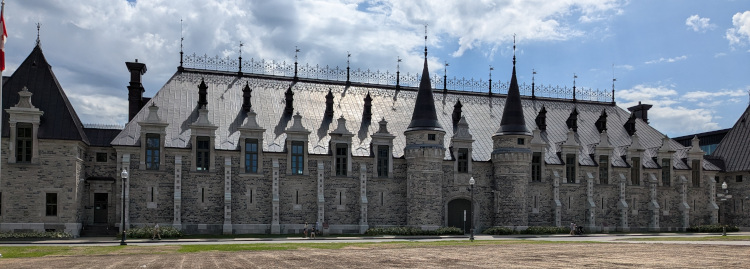
On my way to Musée des Plaines d’Abraham, came across Les Voltigeurs de Québec which I had no clue was a Military Reserve till I searched it up as I am writing this post. According to the government website, les Voltigeurs de Québec est le plus ancien régiment canadien-français that still exists. However, this unit likely only consists members of the Canadian Force reserves because if I recall correctly, the only French-Canadian regiment active is the Royal 22e Régiment.

In the same area held memorials and monuments to honor the soldiers who died in the war. While hard to see with this resolution, the list consists of French names which I assume are Canadian soldiers of the Royal 22e Régiment. As member of the United Nations Armed Forces, Canada has deployed over 26 000 personnels to the war effort where at least 516 personnels lost their lives. Also in the image is the list of soldiers from what I presumed is also part of the Royal 22e Régiment who fell during the Afghanistan War.
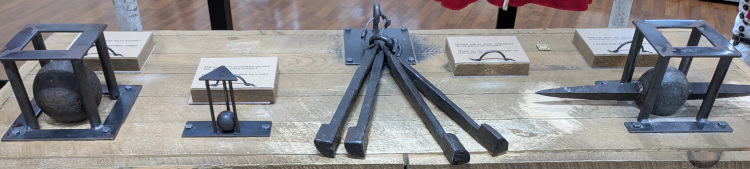
One interesting part of Musée des Plaines d’Abraham was learning the different types of cannon munitions. Starting from the far left is just a regular cannon ball typically used in the 18th century. The small ball next to it is part of the many clustered munitions used to go against a massed infantry called the grapeshot. A term I only have heard previously from Bloons Tower Defense. The next set I don’t recall but I believe it had to do with piercing ship hulls (I could be wrong). The final one I cannot find its name on the internet but is apparently capable of burning its target. I am going to be honest, I have 0 clue how that works because this bullet seems to be for piercing due to the presence of spikes. So I may have confused 3 and 4. One of the two is supposed to burn upon ignition due to placing some type of cloth that would go on fire once ejected from the cannon. I unfortunately did not take pictures of their descriptions so I have no way to verify this fact.


Exiting the museum and on my way to Vieux-Québec, I was greeted with a Confucius statue which got me confused. According to the description, this was a gift from the people of Shandong China in Spring 2009 as a symbol of their friendship with the province of Québec. There is a similar statue of Gandhi given to Québec in 2006. There are a lot of statues around the area.
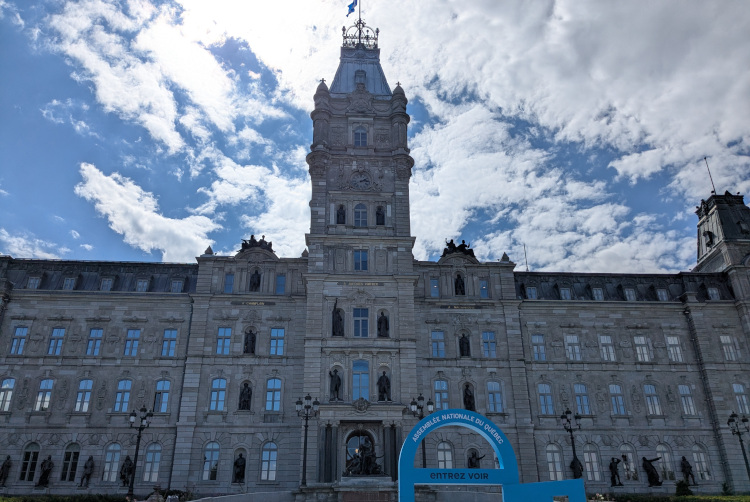
At l’hôtel du Parlement du Québec, there are many statues. Careful to not confuse this building ni l’hôtel de ville as an actual hotel where voyagers sleep. According to a signboard, the building est inspiré du Palais du Louvre. There’s also a lot of statues around and on the buildings.

These are the statues of the three women who led the effort to allow women to vote for the Québec provincial elections, many years after other provinces such as Ontario and the federal election. As soon as I came across these statues on my way to Vieux-Québec, I decided to take a detour and visit l’Hôtel du Parlement du Québec because I wanted to know why there were only 4 (only 3 are shown in the photos) instead of Célèbres cinq (the famous five) who paved the way to allow women to be a senator. I mistakenly thought les Célèbres cinq had paved the way for women to vote in Canada but apparently most women were able to vote about a decade before the famous Persons Case (1929) (women of age over 21 years old had the right to vote in Federal elections since 1918). I did not realise that Québec would be the last or one of the last provinces to allow women to vote provincially.

A statue of Marie-Claire Kirkland who was apparently the first woman to be elected to l’Assemblée législative du Québec in 1961. After finishing my quick detour, I continued my way to Vieux-Québec.

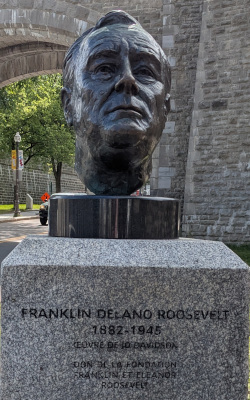
Seeing monuments depicting figures from around the world including a poet from Ukraine and Vietnam, it came to no surprise to me to see Winston Churchill and Franklin D. Roosevelt, the leaders of United Kingdom and USA respectively during la Seconde Guerre mondiale. However, there was more to meet the eyes (hopefully I did not butcher this English idiom; edit: it should have been “more than meets the eye”). The two leaders convened at the hotel Château Frontenac in 1943 to discuss war plans which includes the D-Day Invasion or what we also call the Normandy Landings. I do have some recollection during my younger years learning about this event but it did not click till the tourist guide recounted the event, including how the plans were left at the hotel and was later found by a low ranking soldier who was cleaning the conference room. Luckily for the soldier, he was not placed in confinement to guard the secrets and remained silent on the plans till after the operations.
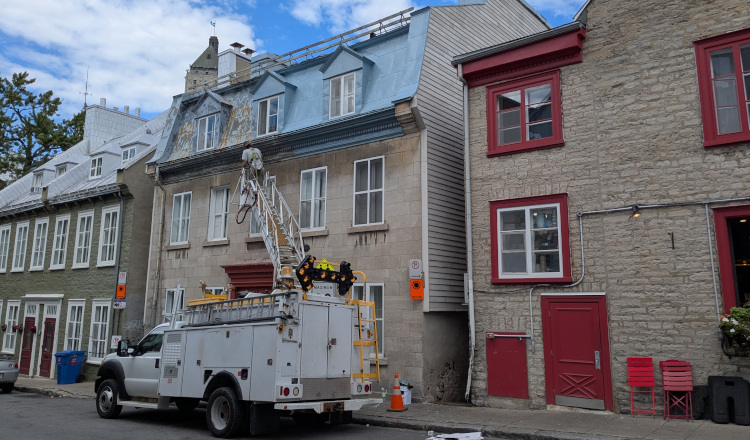
One interesting thing about Vieux-Québec is how incoherent the architecture is. I do not have a good image of the various buildings that exist in the city but according to the guides, Québec was rich with Scottish Yellow Bricks because the English would often use them to help stabilise empty cargo ships as the goods would be sent to UK but there was nothing to send back that would stabilise these now empty ships. So one can see the influence of the buildings due to this. Not that I have an image of such building, at least not that I am aware of. But from the images below and above, one can notice differences in the masonry.
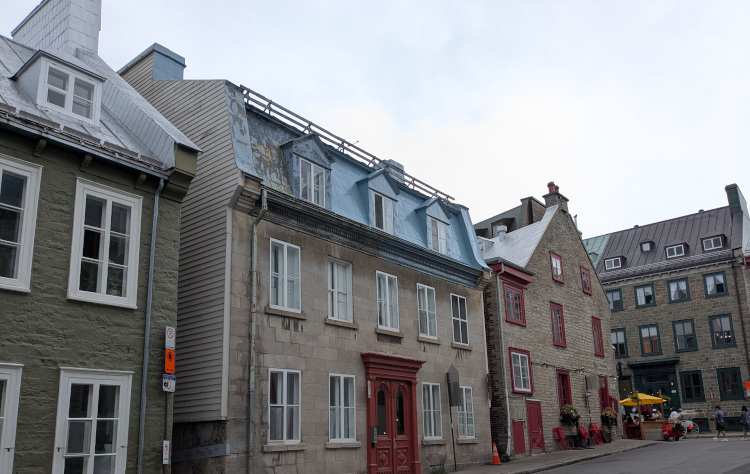
On the first day at Vieux-Québec, I saw work being done to paint the roof but I guess the man left it undone or it’s a process that takes a span of a few days to properly paint the roof.
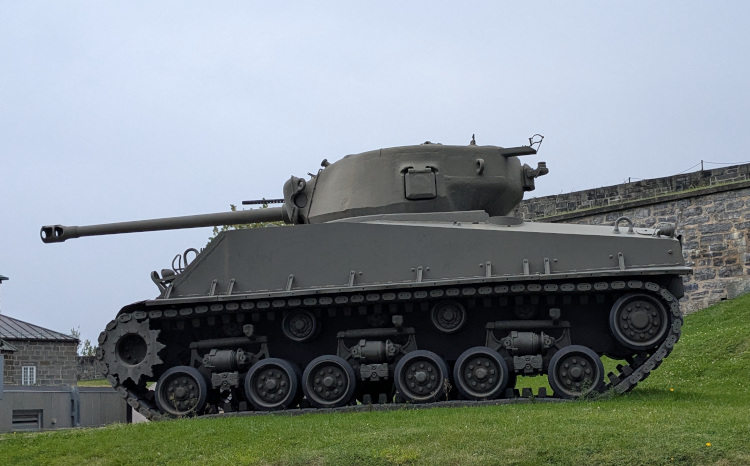
A random sherman tank found at the Citadelle, a star fortress to defend Québec City. Vieux-Québec is a fortified city but I guess the British felt the need to build a star fortress to better protect the area from the Americans.

The Star Fortress, la Citadelle du Québec extracted from Wikipedia taken by Cpl David Robert

A vehicule, presumably a universal carrier to transport weapons, ammunition and soldiers in the battlefield.

Residence of the gouverneur général at the Citadelle taken from their official site
Within the Citadelle lies the second residence for the gouverneur général du Canada, the King’s representative in Canada. Canada is a constitional monarchy meaning our head of state is actually the King/Queen of Canada (i.e. the King/Queen of England) while the Prime Minister is the Head of Government. In practice, the King/Queen of UK has no power over Canada, it is merely a symbolic relationship. The gouverneur géneral is our representative of the King/Queen of England selected by the Prime Minister. The primary residence is located in Ottawa which I have yet to visit even though it is the city I have “lived” for the most part of my life. As the citadelle was originally a military installation, the residence does not look anything spectacular but I can assure you that they renovated the inside to be much more impressive and luxurious.

Two soldiers preparing to shoot a cannon at noon. I did not stay for the shot and failed to hear the cannon. Rather I heard instead the church bells which also rang around the same time period unless I was hallucinating.
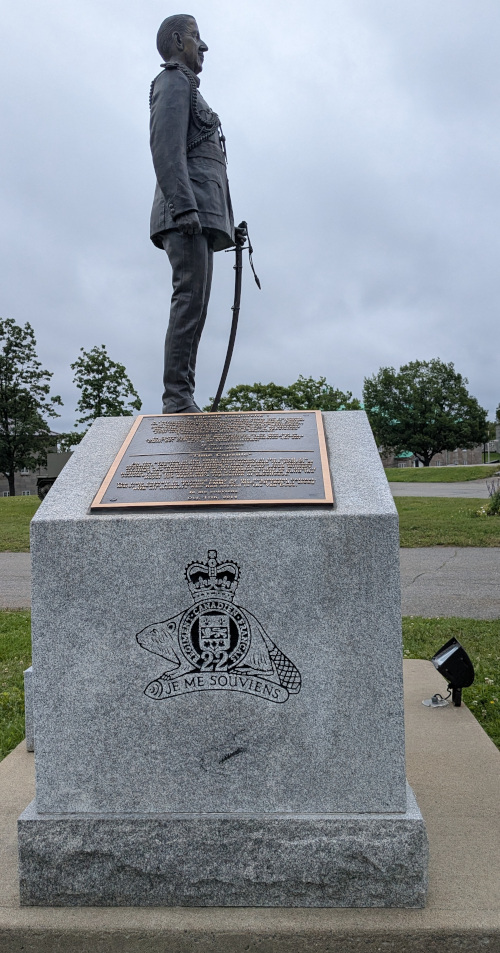
Apparently a monument to commemerate a time capsule and the members of the Royal 22e Régiment? I did not take a close look at the plaque, it just caught my eye for one reason, it contained the insignia of the Royal 22e Régiment. The phrase “Je me souviens” can have different meanings in Canada depending on context and where you are located.
In the military context, it refers to remembering the sacrifices of the armed forces. On November 11, this is the phrase we invoke in remembrance of the sacrifice made during the World Wars and the loss of lives in subsequent wars such as the Korean War (1950-1953) and the War in Afghanistan (2001-2014).
However, in Québec, this phrase has another meaning as described in the following plaque:

According to the plaque, the motto was created by Eugène-Étienne Taché and is used currently to recall the rich history of Québec or more literally to “evoke the rich past of the nation of Québec”. The motto summarises in three words the assembly of themes on the facade of the Parlement (the front exterior wall).
The government’s website explains this better so I’ll leave it to them to explain the meaning.